
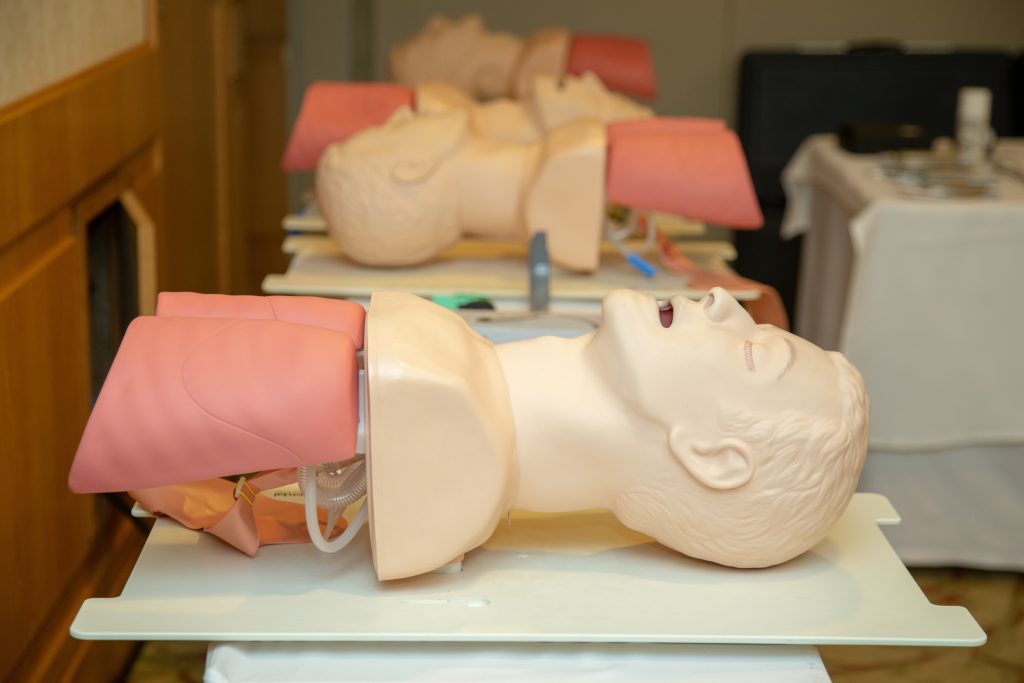
The landscape of emergency cardiovascular care education has shifted dramatically toward hybrid models. Traditional formats relied on full-day lectures paired with shared equipment practice. Today training centers utilize digital coursework for cognitive learning followed by rapid in-person skills verifications. This change requires training sites to adapt their equipment strategies to keep pace with shorter class windows.
Instructors must provide standalone practice stations to prevent learning bottlenecks. When students complete online modules they expect quick hands-on testing without waiting in lines. Adapting to this demand ensures your business remains competitive and appeals to busy corporate clients.
Overcoming the Logistical Chaos of Class Rotation
Moving away from shared student stations removes a major administrative headache for safety schools. In traditional setups tracking who used which torso created unnecessary classroom delays. Instructors spent valuable instruction minutes wiping down plastic faces between short practice rotations.
Transitioning your fleet to a dedicated individual cpr training manikin configuration solves this operational friction entirely. Every attendee receives an isolated workspace from the moment they sit down until their final test concludes.
Eliminating Shared Equipment Downtime
Cleaning equipment mid-class breaks the flow of instruction and frustrates students. It introduces safety anxieties regarding cross-contamination that can distract from the lifesaving material. Providing dedicated gear lets students focus purely on building muscle memory for chest compressions.
Your training windows become highly predictable when you do not factor in cleaning pauses. This optimization lets you schedule multiple back-to-back testing sessions on high-volume weekend mornings.
Speeding Up Assembly and Teardown Routines
Setting up twelve distinct training stations can easily overwhelm a solo business owner. Traditional full-body manikins feature rigid internal parts that require significant physical effort to assemble. Advanced training operations look for modular torsos that feature tool-free configuration processes.
Fast lung-bag installation mechanics turn tedious prep work into a quick routine. Choosing gear with simple access points allows you to prime a classroom in minutes. This speed is invaluable when renting temporary conference spaces that bill by the exact hour.
Solving the Financial Strain of Multi-Unit Buying
The most common worry for expanding training centers is the initial capital investment. Buying twelve individual stations sounds significantly more expensive than purchasing three multi-packs. Many operators assume they must compromise on equipment durability to afford an expanded inventory.
This financial fear often evaporates when reviewing modern modular single-unit options. Manufacturers now engineer highly specialized entry-level torsos explicitly tailored for high-volume fleet deployment.
Budget-Friendly Alternatives to Large Family Packs
You do not need full-size family manikin sets to run an efficient blended learning environment. Investing in a portable cpr manikin single pack delivers complete pedagogical utility at a lower price point. These specialized torsos focus entirely on core chest mechanisms and proper head-tilt behaviors.
For classrooms requiring maximum structural durability on a tight budget alternative form factors are available. Selecting the Life/form Basic Buddy Single CPR Manikin provides an indestructible one-piece internal mechanism. This design withstands thousands of compression cycles without suffering structural frame fatigue.
Maximizing Student Ratios Affordably
Lowering the cost per training station directly alters your business growth path. Instead of limiting your registration caps you can scale up to meet large workplace contracts. A lower equipment cost lets you achieve full return on investment within your first few training sessions.
This affordability prevents you from relying on credit lines to purchase initial assets. Keeping your business debt-free in its early phases secures long-term operational health and agility.
Meeting Strict Electronic Feedback Mandates
Lower equipment costs cannot come at the expense of local regulatory compliance. The American Heart Association enforces definitive rules regarding real-time corrective feedback during testing. Manikins must track whether a student reaches the proper compression depth and speed.
Some business owners assume that smaller individual units lack these advanced tracking capabilities. Modern safety engineering ensures even ultra-lightweight models maintain absolute compliance with international training codes.
Understanding Current Regulatory Requirements
AHA standards dictate that compression feedback must be objective rather than subjective. Instructors can no longer simply look at a student and judge their physical depth accuracy. Electronic sensors must measure performance metrics to validate certification approvals.
These mandates ensure that every certified student understands the true physical effort required during cardiac emergencies. Experiencing the life-saving power of CPR first-hand builds authentic rescue capabilities.
Keeping Compact Fleet Units Compliant
Modern single packs integrate advanced piston electronics directly beneath the sternum plate. These sensors activate automatically when compressions begin, requiring no complex software syncing. LED light systems on the shoulder area provide instant visual confirmation of compression rhythms.
Audible clickers confirm when a student hits the full two-inch compression threshold perfectly. This automatic feedback reduces the instructor’s scanning burden during large multi-person testing blocks. You can monitor the entire room simply by looking for the steady green status lights.
Solving the Mobile Instructor Transport Problem
Mobile training routes represent a profitable segment for independent safety schools. Corporate clients pay premium rates to have instructors train their staff directly on-site. However, moving standard equipment fleets in and out of office buildings poses a major physical challenge.
Heavy equipment bags cause chronic physical fatigue and raise the risk of accidental property damage. Choosing stackable, slimline equipment styles ensures your mobile operations run smoothly without strain.

Minimizing Physical Load and Storage Footprints
Clunky, full-sized training dummies clutter your vehicle trunks and home storage rooms quickly. Modern individual torsos utilize clever nesting designs to fit multiple units into single carry containers. This space-saving design allows you to pack an entire twelve-person testing suite inside a standard sedan trunk.
Reducing the bulk of your gear means fewer trips from the parking lot to the client’s office. You can roll all your necessary teaching gear through front doors in a single trip.
Protecting Fleet Integrity During Transit
Constant transit exposes training equipment to bumpy roads, cold temperatures, and vehicle vibrations. Rigid plastics crack easily if items shift violently inside a moving cargo van. Fleet models should feature high-density polymers that flex naturally under pressure without warping.
Using custom-fitted padded transport luggage prevents internal electronic components from coming loose. Keeping your assets secure minimizes maintenance downtime and protects your professional presentation.
Consumable Economy in Individual Learning
Operating an individual station model changes your recurring inventory workflows. When every student utilizes an isolated manikin your face shield consumption balances out predictably. You no longer waste multiple individual shields on a single torso during mid-class student swaps.
You can install a fresh lung bag before class knowing it serves one single client. This alignment simplifies your cost tracking and allows you to calculate exact profit margins down to the penny. Purchasing these consumable liners in bulk packages ensures your ongoing cost per student remains remarkably low.
Transitioning Your Training Center Safely
Adapting to modern blended learning models is a proven way to increase your class volume. Providing standalone student stations satisfies modern safety expectations while accelerating your testing workflows. The efficiency gains from faster class turnovers easily justify updating your inventory strategy.
Do not let equipment logistics hold your training business back from expanding this season. Contact the corporate support staff at CPR Depot USA today to receive a personalized bulk quote for your training center. We will help you select the ideal compliant fleet configuration to scale your business with total confidence.
FAQs
- Does an individual cpr training manikin meet all official AHA feedback rules? Yes, modern single-student fleet models feature integrated electronic sensors that monitor compression speed and depth to fulfill all regulatory criteria.
- How does a portable cpr manikin single pack reduce my setup times? These units use lightweight, tool-free components and simple lung-bag paths, allowing you to assemble an entire classroom in minutes.
- Are single-student manikins durable enough for high-volume corporate training? Yes, they are manufactured using industrial-strength polymers designed to withstand repetitive compression practice across multiple weekly classes.
- Can I mix different individual manikin brands within the same blended learning class? You can, but using uniform equipment keeps your instruction seamless because all students follow the exact same feedback light sequences.