

The pet care industry in 2026 is no longer about just “walking and feeding.” We have entered an era where pet owners view their animals as full family members. This shift has created a massive surge in demand for professional pet first aid certification. Whether you are a groomer, a dog daycare owner, or a professional pet sitter, the expectation is clear: you must be prepared for a life-threatening emergency.
A key driver of this trend is the realization that “watching a video” is not enough to save a life. Responding to a cardiac or respiratory event in a canine requires physical coordination that can only be built through practice. As a result, the use of a professional-grade dog CPR manikin has become the gold standard for any legitimate training program.
Solving the “Human Technique” Error
One of the biggest risks in pet first aid is the “Human Technique” error. Well-meaning rescuers often try to apply what they learned in a standard human CPR class to their dogs. This mistake is understandable but dangerous. A dog’s anatomy requires a completely different approach to hand placement and ventilation.
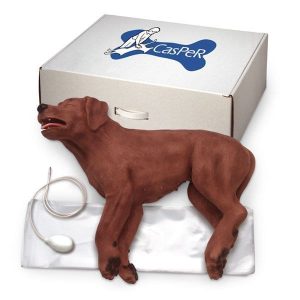
For example, while human compressions are performed on the back, most dogs require lateral recumbency (lying on their side). The compression point varies depending on the dog’s chest shape—round-chested, deep-chested, or barrel-chested. Without a canine CPR manikin for professional pet first aid certification, students often struggle to find the heart’s location or apply the correct 1/3 to 1/2 chest depth. Practicing on a realistic trainer ensures these nuances become instinctual before a real crisis occurs.
Lowering High Insurance Premiums in 2026
For business owners in the pet industry, 2026 has brought a new financial reality: skyrocketing insurance costs. Insurers are now scrutinizing the credentials of staff at boarding facilities and daycares more than ever. One of the most effective ways to negotiate lower premiums is by proving your team is certified in pet first aid through a hands-on program.
Insurance providers recognize that a staff member who has practiced on a dog CPR manikin is statistically more likely to act correctly during an emergency. This reduced risk translates directly into lower liability. By investing in high-quality dog CPR manikins, you aren’t just buying a tool; you are protecting your business’s financial future and demonstrating a high level of professional responsibility to your clients.
Boosting Classroom Engagement with Realism
As an instructor, you know that keeping a class focused is a constant battle. In 2026, students expect an interactive experience. Reading from a manual about “mouth-to-snout” breathing is a world away from actually feeling a manikin’s chest rise as you deliver a rescue breath.
Realistic trainers provide the haptic feedback that makes learning “stick.” When a student sees a visible chest rise or hears a “clicker” indicating the correct compression depth, their confidence grows. This level of engagement turns a dry certification course into a life-changing experience. Stories like this woman who saved her dog’s life after learning the proper techniques highlight the real-world impact of your training. Using the right gear makes those outcomes possible for your students too.

Hygiene and Sanitation in Professional Training
Post-pandemic standards have made students more conscious of hygiene than ever before. Sharing a training device that hasn’t been properly sanitized is a major deterrent for many learners. Modern canine manikins solve this by incorporating disposable lung bags and removable nosepieces.
This focus on hygiene allows for high-volume turnover in large classes without compromising student safety. Instructors can quickly swap out internal components between sessions, ensuring every student has a clean, safe environment to practice their skills. This level of professionalism reflects well on your training center and encourages word-of-mouth referrals from satisfied, safe students.
Adapting to Breed-Specific CPR Needs
In 2026, “one size fits all” no longer applies to pet CPR. Modern certification programs emphasize the differences between a Greyhound’s keel-shaped chest and a Bulldog’s barrel chest. A high-quality dog CPR manikin allows instructors to demonstrate these variations effectively.
Students learn to adapt their hand position:
- Round-chested dogs: Compressions at the widest part of the chest.
- Deep-chested dogs: Compressions directly over the heart.
- Barrel-chested dogs: Often requiring compressions on the back (dorsal recumbency).
Mastering these distinctions on a manikin prevents the “freeze response” that occurs when a rescuer is faced with a dog that doesn’t fit a standard template.
The Future of Pet First Aid Technology
Looking ahead, the technology behind pet simulation is only getting better. We are seeing trainers with integrated electronic monitors that track compression rate and depth in real-time. This data-driven approach allows instructors to provide objective feedback to students, ensuring they meet the 100-120 compressions per minute standard required by current guidelines.
By staying updated with the latest gear, you position your training business at the forefront of the industry. Clients in 2026 are looking for experts who use the best tools available. Whether you are upgrading your current fleet or starting a new program from scratch, choosing the right manikins is the most important decision you will make.
Practical Steps to Start Your Pet CPR Program
Starting a pet first aid program doesn’t have to be overwhelming. The demand is already there; you just need to provide the expertise and the environment for learning.
- Define your target audience: Are you training pet owners or local business staff?
- Select your curriculum: Ensure it follows the latest 2025/2026 science from organizations like the RECOVER Initiative.
- Equip your classroom: Purchase a variety of dog CPR manikins to represent different breeds and sizes.
- Promote the benefits: Focus on the “peace of mind” for owners and the “reduced liability” for businesses.
Ready to lead the pack in 2026 pet safety? If you need help selecting the best gear for your specific needs, feel free to contact us today for a consultation on building your training fleet.
FAQs
Can I use a human CPR manikin to teach dog CPR? No. Dog anatomy is significantly different, requiring lateral placement and mouth-to-snout ventilation. Using a human manikin can lead to the “Human Technique” error, which is ineffective and potentially harmful in a real emergency.
Are there different manikins for different dog breeds? While some universal manikins are available, professional programs often use a mix of trainers or manikins that can be adjusted to simulate different chest shapes, such as deep-chested or barrel-chested breeds.
How often should I replace the lung bags in a dog CPR manikin? To maintain 2026 hygiene standards, lung bags should be replaced after every student or at the end of every class session where mouth-to-snout ventilation was practiced.
Why is mouth-to-snout ventilation used instead of mouth-to-mouth? A dog’s snout is its primary airway. Closing the mouth and breathing directly into the nose ensures a proper seal and allows oxygen to reach the lungs more effectively than trying to cover the large, often loose-lipped mouth of a dog.
Does pet first aid certification expire? Most professional certifications, including those from the Red Cross, typically last for two to three years. Staying current is vital as protocols and life-saving technologies evolve.