
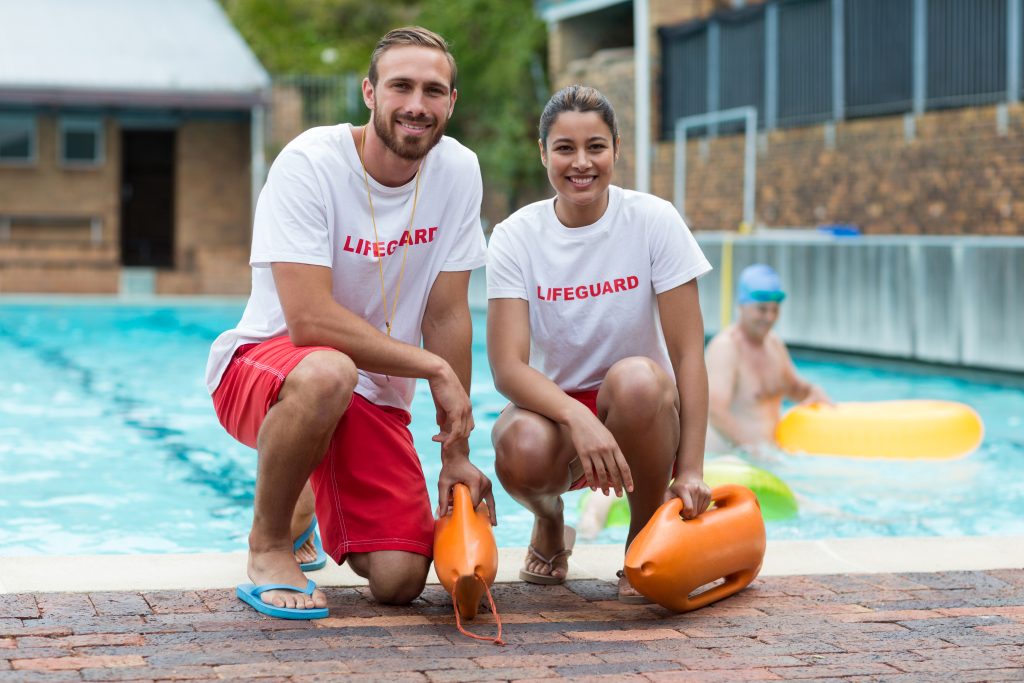
Every aquatic director knows the unique pressure of managing a waterfront or community pool. When a swimmer goes under, the clock starts ticking faster than in almost any other medical emergency. Brain damage can begin in four to six minutes without oxygen. Performing resuscitation on a slippery pool deck while soaked with water creates operational friction that standard indoor training fails to simulate.
Teaching guards to manage submerged cardiac arrest takes deliberate preparation. It requires bridging physical water extraction with precise medical care. Applying targeted aquatic CPR training tips helps training managers build resilient guards, protect budget dollars, and run seamless drills.
Aquatic CPR Training Tips for Submerged Emergencies
Training guards on dry land creates a false sense of security. In a comfortable classroom, placing hands on a chest and pushing to a metronome feels straightforward. Add 50 metres of sprint swimming, a deep dive, dragging a limp weight, and wet hands slipping off a resuscitation mask, and performance drops quickly.
Instructors must build drills around real world physical stress. Guards need to practice switching instantly from high exertion swimming to calm, clinical decision making.
The Physiology of Submerged Cardiac Arrest
Unlike standard sudden cardiac arrest caused by ventricular fibrillation, drowning victims suffer from hypoxic cardiac arrest. Their heart stops because their brain and body ran out of oxygen. This difference changes how resuscitation must be delivered.
Rescue ventilation is paramount. While hands-only CPR works well for sudden adult cardiac collapses on land, submerged victims need oxygen immediately. Instructors must emphasize starting ventilations as soon as the victim is on a firm surface. As highlighted in emergency care insights by Lee Health, immediate CPR maintains oxygenated blood flow to vital organs until advanced care arrives.
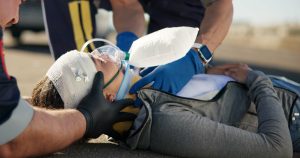
Pool Lifeguard Rescue Drills That Bridge Water to Deck
Executing a successful pool lifeguard rescue requires seamless teamwork. The moment a victim breaks the surface, every second counts. The physical handoff from water extractions to deck resuscitation is where time is often lost.
Deep End Extraction and Weight Management
Extracting an unconscious person from deep water is physically demanding. A passive victim acts as dead weight. Teens and young adults on guard staff often struggle with the physical leverage needed to lift a limp body onto the deck.
Run drills focused on two-guard spinal board extractions and rapid passive lifts:
- Position the backboard vertically against the pool edge.
- Secure the victim under the arms.
- Use the buoyancy of the water to push up while the land guard pulls from above.
Practicing this movement repeatedly builds muscle memory, ensuring guards do not injure their backs during an emergency.
Moving From Wet Deck to AED Deployment
Water and electronics do not mix well. A major bottleneck during waterfront emergencies is the delay in applying an Automated External Defibrillator (AED). Guards often freeze, wondering how dry the victim needs to be before delivering a shock.
Teach your team the two-second torso wipe protocol. One guard immediately grabs a towel and wipes the chest in a single motion while the second guard powers on the AED. The victim does not need to be completely dry, but the chest area under the pads must be clear of standing water to ensure proper pad adhesion and prevent electrical arching across the skin.
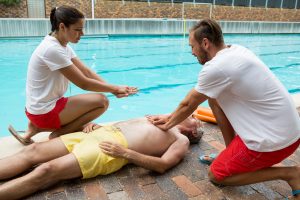
Overcoming Equipment Breakdown and Moisture Damage
One of the biggest headaches for facility managers is gear destruction. Aquatic environments destroy standard medical training equipment.
Why Standard Manikins Fail in Aquatic Environments
Standard CPR manikins rely on foam, internal metal springs, and open latex skin designs. When exposed to pool chemicals, salt water, or submersion, several problems occur:
- Internal springs rust and snap within weeks.
- Foam cores absorb water, turning into heavy, waterlogged hazards.
- Trapped moisture creates black mold inside the chest cavity.
- Electronics and LED feedback monitors short out from water exposure.
Using standard manikins for aquatic drills ruins training budgets and leaves teams without gear mid-season.
Selecting Heavy Duty Submersible Training Gear
Aquatic centers need specialized gear built for water. Investing in purpose built equipment saves money over time and improves training realism.
The Adult Water Rescue Manikin features a rust resistant steel frame and articulated joints designed for submersions. It allows guards to practice authentic surface dives, deep water retrievals, and board extractions without ruining internal parts.
For advanced search and rescue scenarios in lakes, rivers, or large pool complexes, consider the Randy 9000 Trainer. This customizable manikin allows you to alter weight distribution by adding water or sand to individual limb sections, matching the exact physical challenge your staff will face.
Managing Airway Resuscitation in Wet Environments
Submerged victims frequently regurgitate water, foam, or stomach contents during chest compressions. Managing an airway on a slippery, wet surface demands specific physical adjustments.
Preventing Airway Slippage and Maintaining Seals
Wet plastic resuscitation masks slip easily off a victim’s face. When a guard applies downward pressure with wet hands, their grip slides, breaking the airtight seal needed for ventilation.
Teach your guards the two-person airway technique whenever possible:
- Guard One: Positions at the top of the victim’s head, using a jaw-thrust maneuver with both hands securing the mask edges.
- Guard Two: Operates the Bag Valve Mask (BVM) or delivers breaths through a pocket mask.
This division of labor guarantees a proper seal and keeps vomit or water from compromising ventilation.
Logistics, Cleaning, and Storage for Aquatic Gear
Proper maintenance extends the life of aquatic equipment and prevents health risks for staff.
After every wet drill, follow a strict equipment maintenance routine:
- Drain all water from internal manikin cavities before loading gear into vehicles or storage rooms.
- Wash the outer skin with a mild bleach solution or specialized sanitizer to eliminate pool chemicals and bacteria.
- Remove face shields and internal lung bags, throwing away single use items immediately.
- Wipe down hard surfaces with dry microfibre cloths.
- Leave storage cases open in a climate controlled room for 24 hours to air dry completely.
Never store wet gear in closed plastic bags or unventilated pump rooms. Stagnant moisture ruins rubber seals and encourages mold growth overnight.
Equip Your Aquatic Team with Rugged, Purpose-Built Gear
Stop replacing waterlogged manikins every season. CPR Depot USA supplies Canadian and American facility managers with heavy duty, water-submersible rescue manikins built for real world waterfront drills.
Browse Our Water Rescue Training Gear
FAQs
Q: Can you use an AED on a victim lying on a wet pool deck? A: Yes. As long as the victim’s chest is wiped dry where the pads are applied, and there is no standing puddle connecting the victim, the operator, and the AED, it is safe to deliver a shock.
Q: Why do submerged victims require rescue breaths before chest compressions? A: Drowning is a hypoxic event. The heart stops due to lack of oxygen, not an internal cardiac defect. Delivering rescue breaths immediately restores oxygen supply to the brain and vital organs.
Q: How do you prevent mold in water rescue manikins? A: Always drain the manikin completely after use, sanitize the skin surfaces with an antibacterial wipe, and dry internal compartments before storing in a ventilated area.
Q: What is the ideal water rescue manikin weight for pool drills? A: Manikins weighing between 20 to 40 kg when filled provide a realistic challenge for extraction drills without risking physical injury to young guard staff during training.