
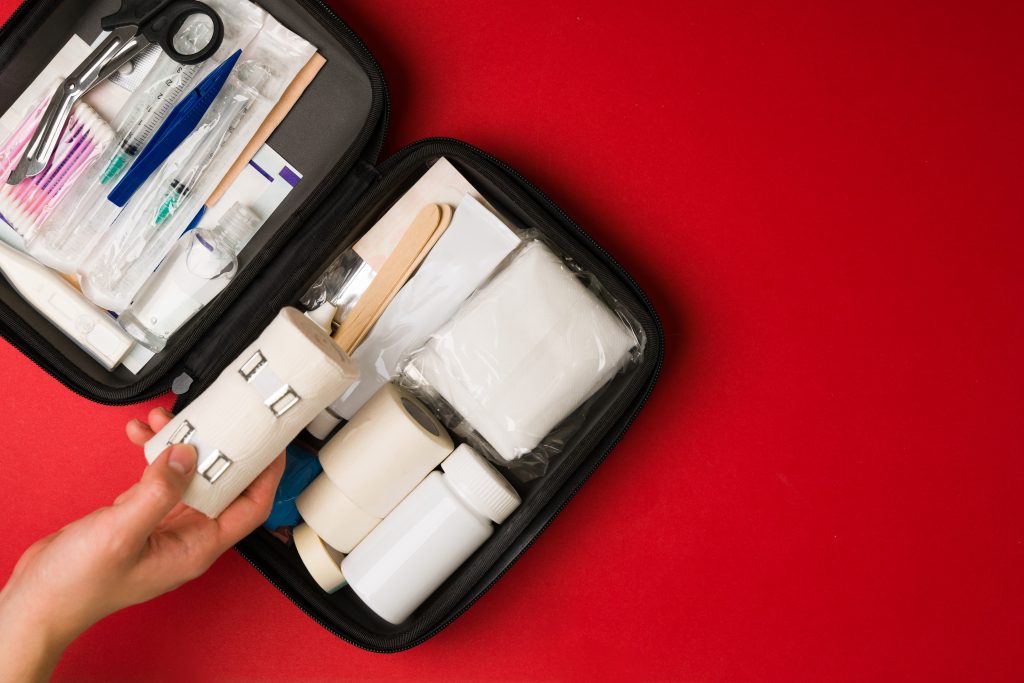
First aid instructors face a major shift in student expectations. Teaching basic CPR compressions and applying small adhesive bandages is no longer enough for complete emergency prep. Corporate clients, school safety directors, and everyday citizens want practical skills to manage massive trauma and severe bleeding.
Uncontrolled hemorrhage is a leading cause of preventable death in accidental injuries. A victim suffering from an arterial laceration can bleed to death in fewer than three minutes, long before paramedics arrive on scene. Integrating a commercial-grade stop the bleed kit into your standard first aid curriculum gives your students the skills and physical confidence needed to save lives during critical emergencies.
Why Hemorrhage Control Belongs in Every First Aid Class
Traditional first aid courses historically spent little time on severe trauma care. Today, workplace safety officers understand that traumatic injuries from industrial machinery, motor vehicle crashes, or severe yard equipment incidents require immediate intervention.
The Critical Three-Minute Window
Arterial bleeding does not wait for an ambulance. When an artery is severed, blood pressure drops rapidly. Lay responders standing right next to the victim are the real first responders.
Teaching students how to recognize life-threatening bleeding versus minor venous oozing transforms bystanders into active lifesavers. They learn to spot spurting blood, pooling blood, or blood-soaked clothing instantly.
Bridging the Gap Between Basic First Aid and Trauma Care
Adding trauma modules to basic certification classes expands your course value. It creates a complete training continuum that covers cardiac arrest, sudden illness, and severe physical trauma.
Providing hands-on practice with windlass tourniquets and hemostatic dressings helps your training center stand out in a competitive marketplace.
Overcoming “Sight of Blood” Anxiety in Non-Medical Learners
One of the largest hurdles instructors encounter is student squeamishness. Lay responders, office workers, and daycare staff often feel nervous or overwhelmed when confronted with severe trauma concepts.
Desensitization Through Progressive Tactile Drills
Effective instruction builds skill step by step. Start your training module using clean, dry practice gear before introducing simulated blood or realistic wound models.
- Step 1: Dry Gear Familiarization. Let students hold blue practice tourniquets, turn the windlass rod, and secure the strap on their own arms.
- Step 2: Partner Pressure Application. Have students practice placing pressure dressings and applying firm manual pressure on a partner’s limb.
- Step 3: Synthetic Wound Packing. Introduce dry wound-packing blocks so students learn how to pack gauze deep into a tissue cavity using two hands.
- Step 4: Timed Scenario Drills. Run timed pressure application drills to build speed and confidence under mild, controlled pressure.
This step-by-step approach reduces fear and replaces panic with clear muscle memory.
Building Muscle Memory Under Simulated Stress
In a real emergency, adrenaline spikes and fine motor skills degrade quickly. If a student has only watched a video on tourniquet placement, their hands will freeze when faced with actual blood.
Repeated physical practice forces the nervous system to store the motion. When your candidates handle dedicated tourniquet training supplies for instructors, they practice high-pressure windlass turns until the motion becomes second nature.
Tourniquet Training Supplies for Instructors: Live Gear vs. Practice Tools
A major challenge for independent training centers is managing gear costs. Using real, single-use medical supplies for weekly classroom practice rapidly destroys course profit margins.
Protecting Course Profit Margins
Live combat tourniquets, such as authentic CAT or SOFTT-W units, feature internal structural webbing designed for a single real-world application. When students crank a live tourniquet windlass dozens of times during practice, the internal strap stretches, twists, and loses structural strength.
Using degraded live gear for real life-saving care later is dangerous. Conversely, throwing away live tourniquets after every class wastes money.
Dedicated practice tourniquets feature blue or red color-coding to clearly separate training gear from live medical stock. Built with heavy-duty stitching and reinforced windlass bars, practice units withstand hundreds of tightening cycles without snapping.
Spotting Dangerous Counterfeit Gear
The online marketplace is flooded with cheap, uncertified knockoff tourniquets selling for a fraction of the cost of real medical equipment. These cheap units frequently snap at the plastic windlass bar when cranked under full human pressure.
Instructors must avoid buying unbranded or counterfeit gear, even for practice. Using flimsy knockoffs teaches students incorrect pressure feedback and risks mixing dangerous, non-functional gear into live emergency kits.
Navigating OSHA, ANSI, and Stop the Bleed Compliance
Corporate clients routinely ask instructors how to keep their facilities fully compliant with federal safety guidelines. Understanding current industry regulations helps you advise business clients accurately.
Understanding ANSI/ISEA Z308.1-2021 Class A vs. Class B Rules
The American National Standards Institute updated its workplace first aid standards under ANSI/ISEA Z308.1-2021. This standard divides workplace first aid kits into two distinct operational classes:
- Class A First Aid Kits: Designed for common workplace injuries like minor cuts, abrasions, and mild burns in low-risk office environments.
- Class B First Aid Kits: Mandated for higher-risk industrial environments, manufacturing floors, construction sites, and warehouses.
Under the 2021 standard revision, Class B workplace kits must include a dedicated windlass or ratchet tourniquet alongside heavy trauma pads and roller bandages.
Meeting Workplace Safety Expectations
OSHA standard 1910.151 requires employers to provide ready access to adequate first aid supplies. By offering specialized hemorrhage control training, you help corporate safety officers fulfill these legal responsibilities.
You can also recommend wall-mounted bleeding control stations for high-occupancy venues like schools, places of worship, gymnasiums, and shopping malls.
Choosing High-Impact Simulation Gear for Your Classroom
Investing in durable, high-quality simulation tools makes your hemorrhage control courses far more engaging and memorable.
Wound-Packing Blocks and Hemorrhage Simulators
Simulating deep junctional wounds in the groin or armpit requires realistic tissue models. Advanced wound-packing blocks feature synthetic soft-tissue cavities with embedded, simulated bleeding vessels.
To enhance your clinical practice setup, explore how specialized training tools fit into broader medical education, such as incorporating an IV Training Arm in Nursing Labs to teach intravenous line access alongside trauma care.
Using realistic models lets students feel the firm resistance needed to pack gauze tightly against a bleeding arterial point. For comprehensive trauma drills, adding a Life/form Ultra Nursing Wound Simulation Kit gives students hands-on practice with realistic lacerations, abdominal eviscerations, and complex soft-tissue injuries.
Multi-Skill Integration for Nursing and EMS Labs
High-level simulation tools fit smoothly into nursing school labs, EMS academies, and industrial emergency response team (ERT) programs. Instructors can combine trauma care with routine medical practice.
For example, students can manage a severe limb trauma scenario, transition to patient stabilization, and dress surrounding injuries in a single continuous drill. Clinical instructors looking to outfit complete skill labs can browse specialized medical simulation models, while students preparing for long clinical shifts can read about selecting the best scrubs for nurses to stay comfortable during long hours on their feet.
Equipping your training program with durable, high-quality trauma supplies ensures your candidates leave class ready to act decisively during life-threatening emergencies.
FAQs
What items are included in a standard stop the bleed kit?
A basic stop the bleed kit includes a CoTCCC-approved windlass tourniquet, hemostatic gauze dressing, a mini compression pressure bandage, stainless steel trauma shears, nitrile protective gloves, and a permanent marker to record application times.
What is the difference between Class A and Class B workplace first aid kits?
Class A kits cover general minor injuries common in low-risk office environments. Class B kits are designed for higher-risk industrial environments and are required to include a dedicated windlass tourniquet, padded splints, and larger quantities of trauma dressings.
Why should instructors use blue practice tourniquets instead of real ones?
Blue practice tourniquets feature reinforced stitching designed for repeated tightening cycles during class drills. Using real medical tourniquets for practice stretches their internal webbing and weakens the windlass, making them unsafe for actual emergency use.
How does hemostatic gauze work during wound packing?
Hemostatic gauze is treated with mineral agents like kaolin or chitosan. When packed tightly against a bleeding artery, these agents speed up the body’s natural blood clotting cascade to stop severe hemorrhage much faster than plain cotton gauze.