
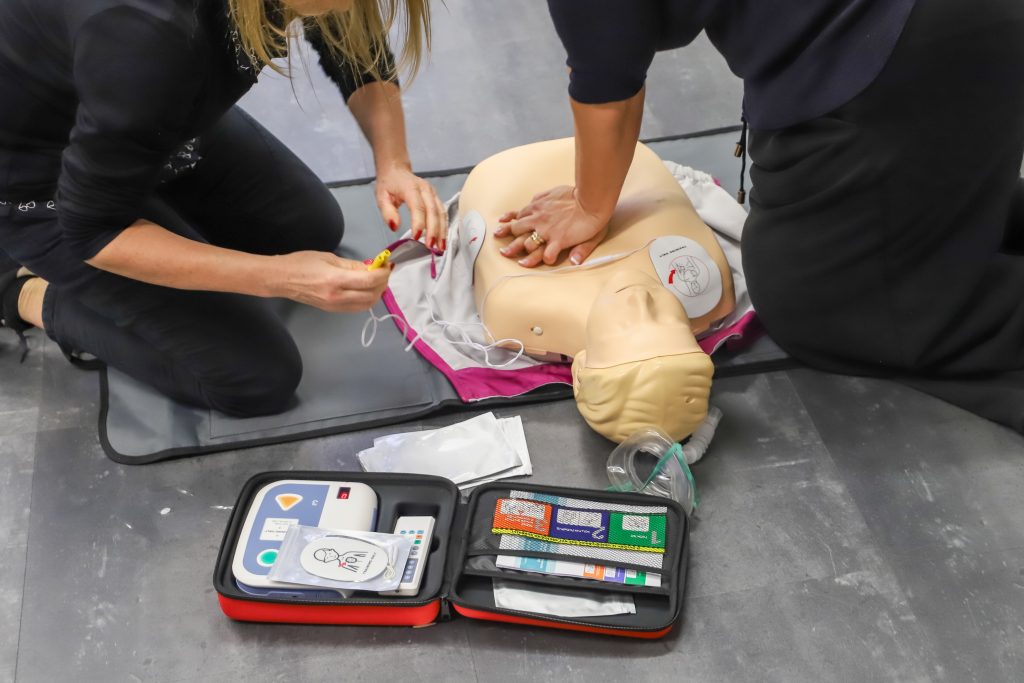
Cardiopulmonary resuscitation training continues to evolve as technology improves. Instructors constantly seek equipment that provides realistic student practice without adding unnecessary weight to their travel bags. Selecting the right automated external defibrillator trainer represents a major decision for certification centers and independent educators alike.
Prestan Products manufactures two leading simulation units: the compact AED UltraTrainer and the full-sized Professional AED Trainer PLUS. Both devices deliver clear voice prompts, metronome tones, and custom scenario options. However, key physical and operational differences set them apart.
Understanding how these two models handle weight, size, remote control capabilities, and pad technology allows training leads to make smart purchasing choices. Balancing classroom realism against daily setup convenience ensures your students get effective practice while your gear remains manageable.
Evaluating Training Devices for Modern CPR Courses
Instructors face unique logistical demands depending on their teaching model. Traveling educators carry multiple manikins, face masks, and defibrillator units into office spaces, community centers, and schools. Fixed training centers need durable devices that closely mimic the live equipment students will encounter during actual cardiac emergencies.
Choosing between compact and full-sized simulation units involves evaluating three primary factors: portability, physical realism, and classroom management features.
Both Prestan models run on C-cell batteries and feature dual-graphic adult and child training pads. Deciding which device fits your curriculum comes down to how your classes operate on a daily basis.
Weight, Luggage Limits, and Equipment Bulk
For mobile CPR instructors, every pound in a transport bag matters. Hauling four full-sized defibrillator trainers alongside four adult manikins and infant torsos creates heavy physical strain. Luggage space in smaller vehicles disappears quickly when using bulky gear cases.
The physical footprint of your training fleet directly impacts your setup speed, travel comfort, and storage capacity.

The Mobile Instructor Advantage of the UltraTrainer
The Prestan AED UltraTrainer excels in compact portability. This device reduces gear volume significantly compared to standard full-size simulation units.
Traveling educators can fit a multi-pack of UltraTrainers into a single lightweight carry bag. This compact profile lets instructors carry complete classroom setups in a single trip from their vehicle to the classroom.
The reduced weight does not compromise sound clarity or scenario customization. The speaker delivers clear, confident voice prompts that guide students through pediatric and adult rescue steps easily.
Instructors who need travel-ready equipment can order the Prestan AED UltraTrainer for mobile course setups.
Realism versus Classroom Practicality
While small size helps with travel, physical realism plays a crucial role in building student confidence. When a student encounters a sudden cardiac arrest in a public building, the live defibrillator hanging in the wall cabinet will be a full-sized commercial unit.
Training on a device that mirrors real commercial equipment builds strong visual and tactile familiarity.
Replicating Real Commercial Defibrillators with the Professional PLUS
The Prestan Professional AED Trainer PLUS is engineered to match the physical presence of actual commercial defibrillators. It closely mirrors real units from major manufacturers in size, feel, and layout.
The Professional PLUS features a heavy-duty outer case, a protective flip lid, and a prominent shock button. Opening the lid or pressing the power button automatically starts the unit, simulating the exact startup sequence used by many commercial AED brands.
This physical footprint helps students overcome apprehension about handling larger medical equipment. Practicing on a full-scale unit builds accurate muscle memory for opening cases, routing pad cords, and pressing prominent shock buttons under pressure.
To outfit fixed classrooms with full-sized simulation equipment, consider purchasing the Prestan Professional AED Trainer PLUS.

Remote Control Functionality and Instructor Overhead
Classroom management requirements vary based on student volume and course design. Teaching a class of 12 or 16 students requires constant monitoring of compression rates, pad positioning, and safety steps.
How an instructor controls training scenarios across multiple stations affects lesson flow and student engagement.
Managing Large Classrooms with Multi-Unit Remotes
The Prestan Professional AED Trainer PLUS offers optional remote control functionality. A single handheld remote allows the instructor to control multiple AED units across the room simultaneously.
Using a remote control provides several teaching benefits:
- Instant Pause: Stop the scenario instantly across all student stations to address common mistakes.
- Troubleshooting Drills: Trigger a loose pad warning remotely to test how students handle pad connection issues.
- Rhythm Adjustments: Toggle between shockable and non-shockable scenarios without walking over to press buttons on individual units.
The Prestan AED UltraTrainer does not support remote control operation. Instructors adjust settings, languages, and scenarios using direct button inputs on the face of each individual UltraTrainer device.
For single-instructor operations managing smaller classes, direct button controls work well. For large training centers running high-volume classes, multi-unit remote control capability saves time and simplifies lesson pacing.
Shared Technology: Pad Sensing and Custom Scenarios
Despite their physical differences, both Prestan AED trainers share core technological features that set them apart from older simulation devices on the market.
Both units eliminate the need for outdated physical plug-in pins or artificial remote sensors that break easily over time.
Universal Pads and Upgradable Software Modules
Both models incorporate Prestan’s patented Pad Sensing System. This technology uses a sensor embedded inside the center of each training pad to detect when it touches a manikin torso.
Key shared technical specifications include:
- Dual-Graphic Pads: Single pad sets feature clear anatomical diagrams for both adult and child placement.
- Reusable Adhesive: Specialized silicone adhesive allows pads to be applied and removed repeatedly without leaving sticky residue on manikin torsos.
- Guideline Compliance: Pre-configured with standard training scenarios that align with current science updates.
- Language Customization: Easy button controls allow instant toggling between primary and secondary languages, such as English and Spanish or English and French.
When resuscitation guidelines change, both units update easily using replaceable software modules, protecting your equipment investment over time.
For insights into broader emergency protocol updates, read these notes on recent choking management advances.
Prestan AED UltraTrainer Review: Performance Breakdown
A thorough Prestan AED UltraTrainer review reveals why this compact unit has become a favorite among traveling safety professionals.
The UltraTrainer packs comprehensive simulation features into a sleek, durable plastic shell. The rubberized side grips make it easy to handle, and the front control panel features clear, intuitive buttons for scenario selection, volume control, and child mode toggling.
Performance highlights from field testing show:
- Battery Efficiency: Powered by 3 C-cell batteries, the UltraTrainer runs for dozens of full training classes before requiring fresh power.
- Audio Clarity: The built-in speaker produces crisp, clear commands that cut through background classroom noise easily.
- Metronome Precision: The compression metronome keeps students on the correct 100 to 120 compressions per minute pace during practice drills.
- Child Mode Toggle: A dedicated child button adjusts shock energy prompts and voice instructions instantly without swapping pads.
The lack of remote control compatibility represents the main trade-off for its smaller size. However, for independent instructors carrying their gear daily, the weight savings outweigh the need for a remote.
Selecting the Best AED Trainer for Your Facility
Choosing the right device requires aligning product specifications with your teaching environment. Both models provide reliable service, compliant scenario programming, and excellent pad durability.
Use this final decision guide to choose the right model:
Select the Prestan AED UltraTrainer if:
- You travel constantly to teach off-site workplace safety courses.
- You need to minimize luggage weight and storage volume.
- You teach small-to-medium sized classes using direct button operation.
- You want a cost-effective multi-pack setup for mobile training.
Select the Prestan Professional AED Trainer PLUS if:
- You operate a fixed simulation lab, nursing school, or dedicated training center.
- You want students to practice on a unit that mirrors commercial AED dimensions.
- You teach large classes and need multi-unit remote control capability.
- Your curriculum emphasizes full-scale equipment handling and lid-activation steps.
Equipping your program with reliable simulation technology ensures your students leave class ready to act quickly during cardiac emergencies.
FAQs
Do Prestan AED trainers deliver a real electric shock?
No. Prestan AED trainers are non-shocking simulation devices designed strictly for educational practice. They mimic the voice prompts, rhythm analysis timing, and operational steps of live defibrillators without generating high-voltage electrical current.
Can I use Prestan training pads on non-Prestan manikins?
Yes. Prestan training pads feature a patented Pad Sensing System that works on almost any CPR training manikin torso. The pads do not require special internal sensors inside the manikin to detect contact.
How many times can I reuse Prestan AED pads?
With proper care, Prestan training pads can be used dozens of times before losing their adhesion. Cleaning the silicone adhesive backing with a damp cloth helps maintain sticky performance over time.
What batteries do Prestan AED trainers require?
The Prestan AED UltraTrainer operates on 3 C-cell batteries. The Prestan Professional AED Trainer PLUS requires 4 C-cell batteries. Optional remotes use 2 AA batteries. Batteries are sold separately.
How do I update my Prestan AED trainer when guidelines change?
Prestan AED trainers update easily when emergency cardiovascular care guidelines change. The Professional AED Trainer PLUS uses a plug-in module, while the UltraTrainer uses an update module, allowing quick updates without replacing the entire unit.