

Medical dramas have kept television viewers glued to their screens for generations. From fast-paced emergency room episodes to intense trauma scenes, resuscitation moments deliver unmatched suspense. However, scriptwriters routinely sacrifice medical accuracy to heighten theatrical tension.
When students walk into a first aid certification course, they bring these television depictions with them. This visual conditioning creates deep-seated misconceptions, poor physical habits, and dangerous hesitation during real cardiac emergencies.
Instructors face the ongoing challenge of correcting these bad habits early in class. By addressing screen inaccuracies directly, educators can improve student focus and build genuine lifesaving confidence.
Evaluating CPR Accuracy in Movies and Television
Hollywood relies on visual storytelling shortcuts to keep audiences entertained. A quiet, methodical resuscitation attempt does not create dramatic tension like blaring alarms, heroic chest punches, and immediate miraculous awakenings.
Research and training data consistently show how screen representations distort public understanding of basic life support.
When people watch actors perform shallow compressions or shock flatlining patients, they internalize those actions as correct procedure. In real cardiac arrest situations, those actions fail to save lives.
Bridging this gap requires clear instruction, evidence-based guidelines, and hands-on practice with modern equipment that measures actual physical performance rather than theatrical effect.
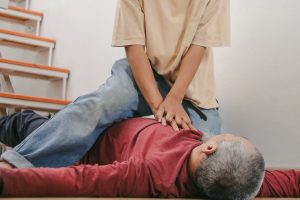
Trope 1: The Flatline Shock Myth
It stands as one of the most common scenes in entertainment history. A cardiac monitor drops to a single flat line across the screen. The lead doctor grabs defibrillator paddles, shouts “Clear!”, and shocks the patient back to consciousness.
This repeated scene creates the widespread flatline shock myth. Electric shocks do not jumpstart a heart that has zero electrical activity.
Why AEDs Require Electrical Activity to Function
An Automated External Defibrillator acts as a reset button rather than a battery charger. It functions by stopping a chaotic, irregular electrical rhythm so the heart’s natural pacemaker can regain control.
Defibrillators target two specific shockable cardiac rhythms:
- Ventricular Fibrillation: The heart muscle quivers uncontrollably and fails to pump blood to the body.
- Ventricular Tachycardia: The heart beats far too fast to allow its chambers to fill with blood between beats.
When a patient experiences a total absence of electrical activity, known as asystole, a defibrillator delivers no clinical benefit. Applying electrical current to motionless heart tissue causes further cellular damage without restoring a pulse.
When a flatline occurs, high-quality manual chest compressions alongside emergency medications represent the only viable path to revive heart function.
Instructors teaching students how automated external defibrillators operate must break this misunderstanding early. Explaining rhythm analysis helps students understand why a unit might instruct them to continue compressions instead of shocking the patient.
For additional context on basic life support guidelines, review official resources provided by the American Heart Association.
To help students master rhythm recognition and proper device operation, instructors rely on specialized units from CPR Depot USA. These devices allow students to practice simulated emergency scenarios safely without high-voltage discharge.
Trope 2: The Feather-Touch Compressions Myth
On camera, actors compress a colleague’s chest by a few centimeters at a casual, relaxed speed. Directors cannot risk injuring an actor’s ribs, so compressions look smooth, gentle, and effortless.
This visual creates the feather-touch compressions myth, leaving students with the false impression that resuscitation requires minimal physical effort.
Moving Beyond Soft Technique with Real-Time Feedback
Real-world resuscitation demands significant physical stamina and force. Proper adult resuscitation standards require rescuers to push hard and fast:
- Target Compression Depth: Push down 2 to 2.4 inches into the chest cavity on adult patients.
- Target Compression Rate: Maintain 100 to 120 compressions per minute, matching the tempo of popular songs.
- Full Chest Recoil: Allow the chest wall to return fully to its natural position between pushes so the heart refills.
When compressions remain too shallow, blood circulation to vital organs drops sharply. Hesitating out of fear of cracking ribs or applying weak pressure represents a primary cause of ineffective bystander assistance.
Overcoming this visual conditioning requires hands-on physical practice. Students must feel the exact physical resistance required to compress an adult chest properly.
Instructors correct soft technique by incorporating instrumented feedback manikins into every training station.
These smart manikins measure compression depth, recoil speed, and hand placement in real time. They give students immediate visual or audio guidance, ensuring their physical habits align with true clinical standards rather than actor performances.
Trope 3: The Instant Awakening Myth
In television storylines, a character receives three quick chest compressions, takes a sudden deep breath, opens their eyes, and starts talking. The emergency appears instantly resolved.
This narrative choice creates the instant awakening myth, leading the public to expect immediate results during resuscitation attempts.
Managing Classroom Expectations for Real-World Resuscitation
In real cardiac events, patients rarely wake up immediately following basic chest compressions. The core purpose of manual compressions is not to awaken the patient on the spot.
Instead, compressions manually pump oxygenated blood to the brain and heart muscle, preserving organ function until professional emergency personnel arrive.
Expecting immediate recovery creates dangerous mistakes during real emergency responses:
- Early Termination: Rescuers might stop compressions prematurely because the patient has not sat up or spoken.
- Panicked Response: Rescuers may assume their physical technique is failing when they see no quick movement.
- Fatigue Management: Teams may fail to rotate rescuers every two minutes, causing compression quality to deteriorate as exhaustion sets in.
Educators must help students dismantle this expectation by conducting realistic team drills using durable manikins. Running extended practice scenarios teaches students how to maintain continuous compressions, manage fatigue, and coordinate smooth hand-offs without expecting instant patient dialogue.
Trope 4: Mouth-to-Mouth Without Barrier Shields
Hollywood characters routinely press their lips directly onto an unconscious stranger to deliver rescue breaths. No protective masks, facial shields, or prep steps appear on camera.
While heroic on film, real-world protocols emphasize rescuer safety, cross-contamination prevention, and proper barrier device usage.
In classroom settings, hygiene and infection control remain top priorities. Teaching students proper barrier application builds confidence while protecting personal health.
Essential protective equipment includes:
- Pocket Masks: One-way valve masks that shield rescuers from fluids while delivering effective oxygen volume.
- Face Shields: Lightweight plastic barriers featuring specialized filters for emergency responders.
- Manikin Lung Bags: Disposable internal bags that keep classroom equipment sanitary across multiple students.
Demonstrating proper mask alignment ensures students focus on creating a tight facial seal, maintaining an open airway, and avoiding excessive air volume during ventilations.
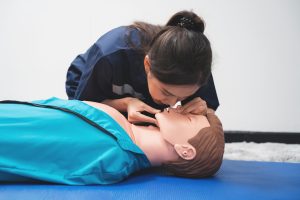
Trope 5: Precordial Thump Miracles
Viewers often watch dramatic characters slam a closed fist directly onto the center of a patient’s chest to restart a stopped heart.
Known clinically as the precordial thump, this procedure carries a narrow historical context. Modern resuscitation science has removed it from standard basic first aid guidelines.
Delivering a physical blow to a patient in cardiac arrest is rarely effective and introduces severe risks:
- Sternal Fractures: Structural damage to the chest wall and surrounding bone tissue.
- Myocardial Contusions: Direct physical trauma to underlying cardiac muscle.
- Delayed Care: Wasting critical seconds that should be spent initiating chest compressions or attaching an AED.
Modern emergency protocols focus on immediate chest compressions and rapid defibrillation. Instructors emphasize repetitive practice with standard compressions rather than outdated physical strikes.
Turning Hollywood Myths Into Engaging Classroom Lessons
Addressing false television tropes provides instructors with an easy way to boost classroom participation. Rather than delivering long lectures, educators can use famous entertainment clips to test student observation skills.
Instructors can structure a myth-busting lesson using simple steps:
- Play a Brief Video Clip: Show a famous television resuscitation scene containing clear medical errors.
- Prompt Classroom Discussion: Ask students to identify what the actors performed incorrectly regarding depth, rhythm, or safety equipment.
- Demonstrate Correct Procedure: Show the proper physical technique using feedback manikins and AED training units.
- Practice with Real-Time Metrics: Have students perform compressions themselves until digital monitors confirm proper depth and rate.
This interactive format breaks classroom monotony, maintains high attention levels, and replaces false media impressions with proper muscle memory.
To stock up on compliant training supplies for your next class, visit the full catalog of CPR Depot USA products.
Upgrade Your Training Facility Equipment
Teaching proper resuscitation techniques requires equipment that accurately mirrors human anatomy. When students train on responsive, feedback-capable manikins, they build physical skills that translate directly to real emergencies.
Outfitting your training facility with modern feedback manikins, realistic AED trainers, and sanitary accessories ensures compliance with current educational standards. Upgrading your classroom supplies helps your students unlearn television myths and master true lifesaving techniques.
Explore CPR Depot USA to find durable training manikins, AED simulation units, and first aid instruction supplies built for modern certification programs.
FAQs
Why do television shows always depict doctors shocking a flatline?
Television directors depict flatline shocks because a continuous monitor tone creates immediate dramatic tension for viewers. A flatline offers a clear visual and auditory signal of danger, while an electric shock provides a physical, dramatic moment of action. Real defibrillators require chaotic internal electrical activity to function, making flatline shocks medically inaccurate.
Can high-quality chest compressions break a patient’s ribs?
Yes, cracked ribs or separated chest cartilage represent common outcomes of effective CPR. Compressing an adult chest 2 to 2.4 inches deep requires substantial force. While bone fractures are unfortunate, maintaining continuous blood flow to the brain and vital organs remains the main objective during cardiac arrest.
Is mouth-to-mouth ventilation still required during CPR?
For untrained bystanders, hands-only CPR consisting of continuous chest compressions without rescue breaths is recommended for adult cardiac arrest. Certified rescuers and healthcare professionals still perform rescue breaths using protective barrier masks, especially in pediatric cases or drownings where lack of oxygen is the primary cause of arrest.
How fast should CPR compressions be delivered?
Chest compressions should be delivered at a speed of 100 to 120 compressions per minute. This rhythm matches the tempo of well-known songs like “Stayin’ Alive.” Modern feedback manikins use audio metronomes and visual lights to help students maintain this target pace naturally during practice.
What is the difference between a real AED and an AED trainer?
A real AED analyzes heart rhythms and delivers a live electrical shock to treat life-threatening cardiac arrhythmias. An AED trainer is a non-shocking simulation device used exclusively for classroom instruction. It mimics the voice instructions, button operations, and pad placements of a live unit without discharging electrical current.