
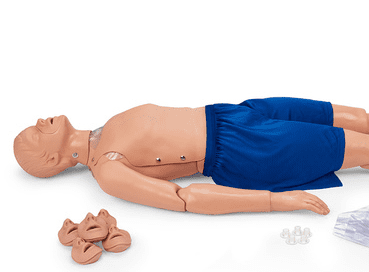
Aquatic rescue training is one of the most physically demanding skills a first responder can learn. Whether it is a teenager looking for summer jobs as a lifeguard or a seasoned Coast Guard member, the equipment used during drills determines the quality of the save. Many facilities rely on human volunteers to act as victims. While this seems cost-effective it actually creates dangerous training gaps.
Eliminating the “Subconscious Helper” in Drills
The biggest problem with using live volunteers is the “Subconscious Helper” phenomenon. Even the most disciplined volunteer will instinctively hold their breath, tense their muscles, or adjust their body position to make the rescue easier. They might kick slightly to stay afloat or move their arms to help the rescuer maintain a grip.
In a real emergency an unconscious victim is dead weight. They do not help. They often slip out of a rescuer’s grasp because their body is completely limp. A water rescue manikin provides this exact experience. It forces the trainee to manage the true physics of a non-responsive body. Using a simulator ensures that when a lifeguard reaches for a victim in a crowded pool they have the muscle memory to handle a heavy uncooperative weight.
The Problem with “The Floaty Dummy”
Inexpensive or improvised training dummies often suffer from poor buoyancy. If a manikin floats too high on the surface the student never learns how to keep a victim’s airway clear while swimming. This is known as “The Floaty Dummy” syndrome. It gives rescuers a false sense of security regarding their own strength and stamina.
A professional-grade lifeguard training manikin is designed to sit at a specific level in the water. Some models are weighted to sink to the bottom. This requires the trainee to perform a surface dive and a controlled ascent. Others are designed to float at a “drowned” angle where the head naturally falls forward or back. This teaches the rescuer that they must actively work to keep the face above the waterline.
Overcoming Equipment Rot and Mildew
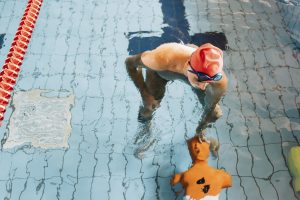
Aquatic directors face a constant battle with the elements. Chlorine and salt water are incredibly corrosive. Traditional fabrics and foams absorb water and quickly become breeding grounds for bacteria. If a trainer is not made of the right materials it will smell like mildew within weeks and begin to fall apart shortly after.
Modern rescue simulators utilize heavy-duty nylon or mesh skins that allow water to drain rapidly. This quick-drain feature is essential for two reasons. First it prevents the manikin from becoming impossibly heavy when being pulled onto a deck or boat. Second, it allows the internal components to dry out. This prevents the “rot” that ruins cheaper equipment and saves the facility money in the long run.
Realism in Search and Rescue Operations
Search and rescue teams often operate in murky water or high-current environments. In these scenarios visibility is zero. Rescuers must rely entirely on touch. A manikin with realistic anatomical features—such as a defined rib cage and limbs that move at the joints—is vital.
If a rescue diver is searching the floor of a lake they need to be able to distinguish a human limb from a piece of sunken timber. Weighted simulators like those in the Rescue Randy line provide the tactile feedback necessary for these high-stakes missions. These tools help divers practice the “search” part of search and rescue with much higher accuracy.
Transition of Care and Extraction Techniques
The rescue does not end when the victim reaches the edge of the water. The transition from the water to a backboard or a rescue boat is where many injuries occur. This is especially true for the rescuers themselves. Lifting a water-logged body is a leading cause of back strain among aquatic professionals.
Using a manikin allows teams to practice these lifts repeatedly without risking a volunteer’s safety. It allows instructors to critique the “spinal management” aspect of the rescue. If a team is too rough with a manikin there are no real-world consequences. This allows them to fail safely in training so they can succeed perfectly in the field.
Training for Open Water vs. Pool Environments
The needs of a backyard pool are very different from the needs of a surf rescue team. Pool trainers are generally lighter and designed for visibility. They often feature bright colors so instructors can monitor the student’s progress from the deck. This is a key feature for large-scale lifeguard certification classes where safety oversight is paramount.
Open water simulators are different. They are often weighted to simulate the effects of currents and waves. They may have high-visibility strips for “lost person” drills or be colored to blend in for more difficult search scenarios. Choosing the right tool for the environment ensures the training is relevant to the challenges the staff will actually face.
Long-Term Value and Budget Considerations
When looking at the price of rescue manikins, it is easy to focus on the upfront cost. However the long-term value is found in the reduced liability and the longevity of the equipment. A single high-quality simulator can last for a decade of training seasons if maintained properly.
Compare this to the cost of replacing human-interest volunteers or the potential legal costs of a failed rescue due to poor training. Investing in a weighted water manikin is a commitment to excellence. It signals to the community and the staff that safety is the top priority.
The Role of Technology in Aquatic Safety
While the physical manikin is the centerpiece of training, newer models are incorporating sensors. Some advanced trainers can now track the amount of water “inhaled” or monitor the pressure applied during the extraction. While these are more common in medical simulators they are starting to appear in the aquatic world.
Even without high-tech sensors the simple addition of a realistic airway makes a difference. Some water trainers allow for basic ventilation practice once the victim is on dry land. This allows for a seamless “rescue-to-resuscitation” drill which is the ultimate goal of any life-saving program.
Maintenance Tips for Aquatic Manikins
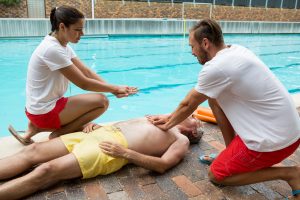
To protect your investment you must follow a strict cleaning protocol. After every use in a pool the manikin should be rinsed with fresh water to remove chlorine. If used in the ocean this step is even more critical to prevent salt crystals from tearing the mesh or fabric.
- Always hang the manikin in a well-ventilated area to dry.
- Do not store them in direct sunlight for long periods as UV rays degrade the material.
- Inspect the “joints” and “seams” for wear every month.
- Store them horizontally or on a heavy-duty hook to prevent the filling from shifting.
By following these steps you ensure that your training supplies are ready whenever the next certification class starts. Proper care is the best way to avoid the equipment rot and mildew that plagues so many aquatic centers.
Building a Stronger Rescue Team
The ultimate goal of using a water rescue manikin is to build confidence. When a lifeguard knows they can pull 150 pounds of dead weight from the bottom of a ten-foot pool they carry themselves differently. They are more alert and more prepared.
This confidence radiates to the patrons of the facility. It creates a culture of safety where everyone knows the staff is trained to the highest possible standard. In the world of aquatic rescue there is no room for “good enough.” Every second counts and every pound of weight matters.
FAQs
How heavy should a water rescue manikin be? The weight depends on the training goal. For basic lifeguard certification a 20-30 pound “junior” manikin is common. For professional fire and rescue teams models often weigh between 60 and 150 pounds to simulate an adult victim.
Can I use a standard CPR manikin in the water? No. Standard CPR manikins are not waterproof and will be ruined by water exposure. They will also float in an unrealistic way and can become a safety hazard if they trap air. Always use a dedicated water rescue manikin.
Are these manikins suitable for swift water training? Yes. Certain models are specifically designed for high-flow environments. They feature reinforced tow points and “drag” characteristics that simulate how a body moves in moving water or rapids.
How do I dry out a manikin that has been submerged? Most professional models feature mesh panels or drain holes. Hang the manikin vertically in a dry area with good airflow. Some instructors use a small fan to speed up the process and prevent mildew.